
How 90s Hip-Hop is Ruling the Vinyl Revival
How 90s Hip-Hop is Ruling the Vinyl Revival
Back to the Boom-Bap: How 90s Hip-Hop is Ruling the Vinyl
Revival
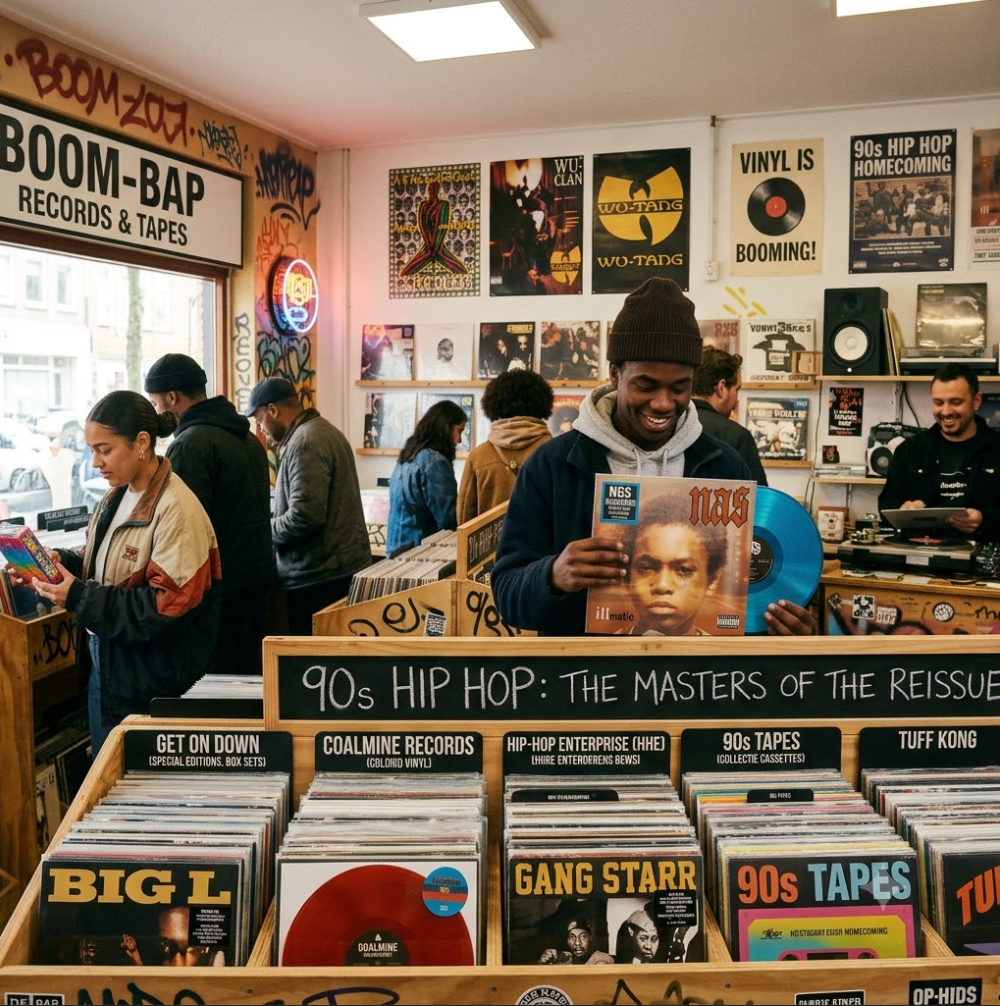
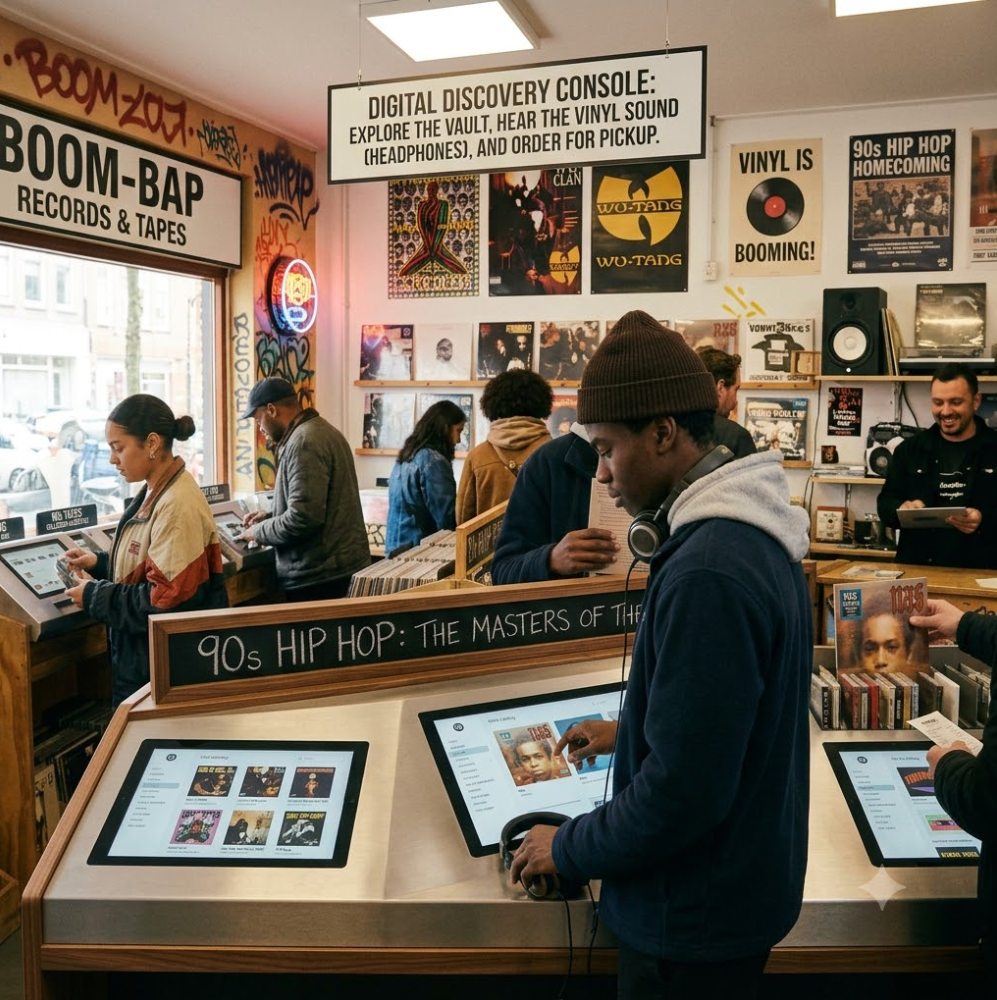
Walk into any newly record shop today,
and you’ll notice something shifting. Amidst the sea of classic rock
standard-issues and modern pop hits, there is a vibrant, bass-heavy corner
drawing a crowd. The cardboard sleeves feature gritty aesthetics, oversized
graffiti lettering, and iconic black-and-white photography.
90s hip-hop is spinning on a loop, and it’s driving the
physical media boom to new heights.
For a genre that was practically built on the backs of
sampled vinyl records, this isn’t just a trend—it’s a homecoming. The
"Golden Era" of hip-hop is being remastered, repackaged, and
re-pressed for a whole new generation of crate-diggers, thanks to a handful of
boutique record labels specializing in bringing history back to the turntable
and the tape deck.
The Ultimate Musical Full-Circle
In the 1990s, producers like DJ Premier, Pete Rock, and The
RZA spent countless hours in dusty basement shops, digging for obscure jazz,
soul, and funk records to sample into their MPCs. They chopped those sounds up,
threw a heavy drum beat over them, and created a revolution.
Today, that exact music has come full circle.
“There’s a beautiful irony to it,” “A kid in 1994 bought a funk record to make a
hip-hop beat. A kid today is buying that hip-hop beat on a freshly pressed
vinyl record. The groove never actually died; it just evolved.”
Streaming might be king for convenience, but you can’t look
at the iconic artwork of Nas’s Illmatic or Wu-Tang’s 36 Chambers
on a five-inch smartphone screen and get the same goosebumps. Physical media
demands your attention. You have to flip the record or pop in the tape; you
have to look at the liner notes. It turns listening to music from background
noise into an event.
The Masters of the Reissue
Major labels own the catalogs, but it’s the independent,
specialized labels that are doing the heavy lifting to keep the culture
authentic. And it’s no longer just about the wax—90s cassette tapes are
experiencing a massive cult resurgence alongside vinyl, complete with
vintage-style shells and colored plastic.
These boutique labels treat 90s re-releases not just as
merchandise, but as artifacts:
Get On Down: These guys are practically the kings of hip-hop presentation. They don’t just re-release an album; they turn it into a museum piece. Think translucent colored wax, deluxe box sets shaped like vintage drum machines, and premium cassette reissues wrapped in nostalgic OBI strips.- Coalmine
Records: Through their dedicated Coalmine Reissues banner, this
indie powerhouse has become a savior for underground, indie, and boom-bap
purists. They treat projects from artists like Hi-Tek, Big Noyd, and Elzhi
with elite audiophile care—dropping meticulously remastered collector's
editions on heavy colored vinyl and limited-run cassettes for the true
collectors.
- Hip-Hop
Enterprise (HHE): Operating out of Belgium, this independent label is
the ultimate detective agency for golden-era purists. HHE tracks down
original artists and rights holders to unearth incredibly rare, shelved,
or completely unreleased 90s underground demos and classics. Through their
main label and sister imprint SouthWest Enterprise, they ensure
these forgotten gems get high-quality, archival-grade life on vinyl, CD,
and tape.
- 90’s
Tapes: Run as a specialized imprint by the vinyl giants at HHV, this
Berlin-based label is a goldmine for golden-era purists. They focus
heavily on rare, slept-on, and out-of-print 90s hip-hop masterpieces
(think classic boom-bap from artists like Kool G Rap, Keith Murray, and
Craig Mack), and nowadays digging into the shelves with unreleased gems, giving
them pristine new life on both vinyl and beautifully packaged cassette
tapes and cd’s.
- RRC & De Rap Winkel: European-based labels that have mastered the art of the "limited drop," connecting the dots between 90s veterans and the modern boom-bap revival, often selling out rare variations in mere minutes.
- Let’s talk about the veterans who have been holding down this culture from day one and are still dropping heat. Back2dasource (Bee), Gentlemen's Relief (Henry), and Chopped Herring Records (Bob) have been in the game for years, doing the heavy lifting to unearth incredibly rare, hard-to-find releases for the fans. Bob from Chopped Herring, in particular, truly blazed a trail for many of today's independent labels. The landscape has changed, and while we’ve lost some incredible foundational labels along the way, fresh ones are constantly emerging to keep the movement alive.
And many more labels which I want to metion, because of their impact on this hobby, Boombap Relicks, Gramofix and TruMinds as well ( there are many others which you can find in the stores and labels area ).
Why 90s Hip-Hop Hits Different on Physical Media
If you’re wondering why a 20-something today is dropping
cold hard cash on an album that came out before they were born, it boils down
to three simple things:
- The
Sonic Warmth: Early 90s hip-hop was famously dusty and warm. When
digitized, some of that grit gets flattened out. On vinyl or cassette, the
crackle of the original sample blends perfectly with the natural texture
of the playback.
- The
Hunt: There is a specific thrill in flipping through a bin or scanning
a tape shelf to pull out a limited-edition pressing of an underground
classic by Mobb Deep, Big L, or CunninLynguists.
- The
Community: Record stores have become social hubs again. Standing at
the counter arguing over who had the better sophomore album—A Tribe Called
Quest or OutKast—is a rite of passage that doesn’t happen in an
algorithm-driven comment section.
Online communities share information about new releases and telling the word.
Dropping the Needle on the Future
The physical media resurgence isn't a flash in the pan. As
more specialized shops open their doors, they are proving that music you can
hold in your hands isn't dead—it was just waiting for the right soundtrack.
By giving 90s hip-hop the premium treatment it deserves,
these specialized labels aren't just selling nostalgia; they are preserving a
foundation. So, if you haven’t yet, it might be time to dust off your
turntable, unearth your old tape deck, and head down to your local shop. Your
speakers will thank you.